

Powerful Foods Rich in Natural Probiotics for Oral and Gut Wellness
Foods rich in natural probiotics have become increasingly popular among people interested in supporting overall wellness. These foods are often discussed in conversations about digestion, nutrition, and the body’s various microbiomes, including the oral microbiome.
Natural probiotic foods are typically created through fermentation, a process that has been used for centuries across many cultures. As researchers continue studying beneficial microorganisms and their role in wellness, fermented foods remain an important area of scientific interest.
While research continues to evolve, many people choose to include probiotic-rich foods as part of a balanced and healthy lifestyle.

What Are Natural Probiotics?
Natural probiotics refer to beneficial microorganisms that may be present in certain fermented foods.
Unlike probiotic supplements, these microorganisms occur naturally through traditional fermentation processes.
Researchers continue exploring how probiotic-containing foods may interact with various microbiomes throughout the body, including the oral environment.
Those interested in learning more about microbial balance may also enjoy our guide on how oral probiotics work.
Why Researchers Study Probiotic Foods
Scientific interest in probiotic foods has expanded significantly in recent years.
Researchers often study:
- Microbial diversity
- Nutrition and wellness
- Digestive health
- Oral microbiome balance
- Fermented food consumption patterns
Although much remains to be learned, fermented foods continue to attract attention within the wellness community.
1. Yogurt
Yogurt is one of the most widely recognized foods rich in natural probiotics.
Produced through the fermentation of milk, yogurt has been consumed for centuries and remains a popular part of many diets.
People often choose yogurt because it is:
- Convenient
- Widely available
- Versatile
- Easy to incorporate into meals and snacks
Not all yogurt products contain active cultures, so many consumers choose products that specifically mention live cultures on the label.

2. Kefir
Kefir is a fermented dairy beverage that has gained popularity among wellness enthusiasts.
Compared with traditional yogurt, kefir often contains a broader variety of microorganisms produced during fermentation.
Kefir is frequently discussed in relation to:
- Digestive wellness
- Nutritional diversity
- Fermented food consumption
- Microbial balance
Its tangy flavor and drinkable consistency make it a unique addition to many diets.
3. Sauerkraut
Sauerkraut is made by fermenting cabbage.
This traditional food has been enjoyed for generations and remains one of the most well-known fermented vegetables.
Many people appreciate sauerkraut because it:
- Contains naturally fermented ingredients
- Is simple to prepare
- Can be added to various meals
- Has a distinctive flavor profile
Researchers continue studying fermented vegetables as part of broader discussions about nutrition and microbial diversity.
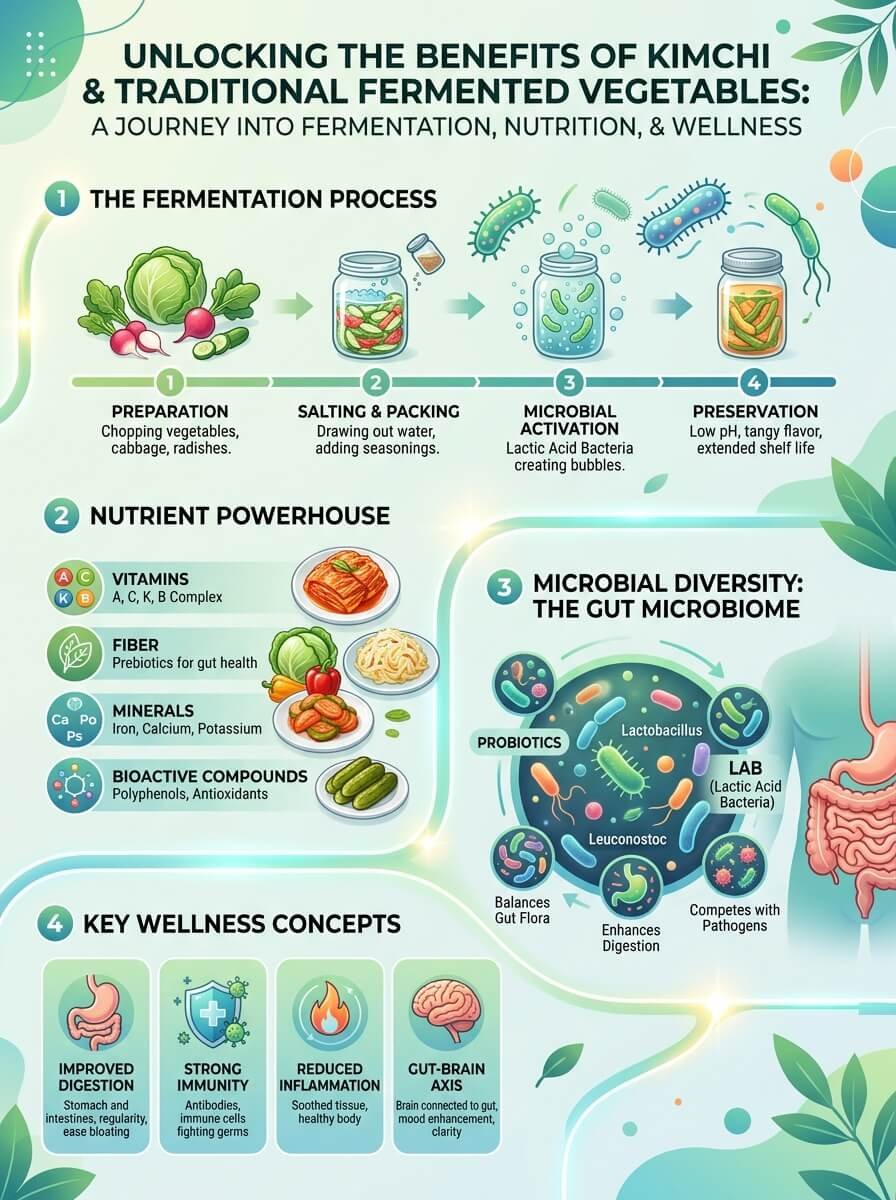
4. Kimchi
Kimchi is a traditional Korean fermented vegetable dish.
It commonly includes ingredients such as:
- Cabbage
- Radishes
- Garlic
- Ginger
- Various seasonings
Kimchi has attracted growing attention worldwide due to increasing interest in fermented foods and wellness-focused nutrition habits.
Many people enjoy kimchi both for its unique flavor and its association with traditional fermentation practices.
Variety Often Matters More Than Perfection
Nutrition experts frequently emphasize the value of dietary variety. Including a diverse range of nutrient-rich foods may be more beneficial than focusing exclusively on a single “superfood” or fermented product.
5. Fermented Vegetables
Beyond sauerkraut and kimchi, many fermented vegetables are gaining popularity.
Examples include:
- Fermented carrots
- Fermented cucumbers
- Fermented beets
- Fermented mixed vegetables
These foods are often included in wellness discussions because fermentation remains one of the oldest food preservation methods used around the world.
6. Miso
Miso is a traditional Japanese food made from fermented soybeans.
Commonly used in soups and other dishes, miso has been consumed for centuries.
Researchers continue examining traditional fermented foods such as miso as part of broader studies involving nutrition, wellness, and microbial diversity.
7. Tempeh
Tempeh is another fermented soybean product.
Originally developed in Indonesia, tempeh has become increasingly popular among individuals seeking plant-based protein sources.
People often choose tempeh because it:
- Provides protein
- Can be used in many recipes
- Fits vegetarian and vegan diets
- Is produced through fermentation
Its growing popularity reflects increasing consumer interest in fermented foods and balanced nutrition.

Why Fermented Foods Continue to Interest Researchers
Fermented foods remain a significant topic of scientific interest because they provide a unique opportunity to study microorganisms, nutrition, and wellness together. As research advances, scientists continue exploring how dietary choices may influence various microbiomes throughout the body.
Quick Overview: Foods Rich in Natural Probiotics
| Probiotic-Rich Food | Why It Is Commonly Discussed |
|---|---|
| 🥛 Yogurt | One of the most widely recognized fermented foods, often chosen for convenience and live cultures. |
| 🥤 Kefir | A fermented dairy beverage frequently discussed for microbial diversity and wellness-focused nutrition. |
| 🥬 Sauerkraut | A traditional fermented cabbage food commonly associated with fermented vegetable diets. |
| 🌶️ Kimchi | A Korean fermented vegetable dish widely discussed in relation to traditional fermentation and wellness nutrition. |
| 🥕 Fermented Vegetables | Includes fermented carrots, cucumbers, beets, and mixed vegetables commonly used in balanced diets. |
| 🍲 Miso | A traditional fermented soybean food often used in soups and discussed in nutrition and microbial diversity topics. |
| 🌱 Tempeh | A fermented soybean product commonly chosen as a plant-based protein source and wellness-friendly food. |
Can Probiotic Foods Support the Oral Microbiome?
Researchers continue investigating how diet may influence the oral microbiome.
Because the oral environment is constantly exposed to food and beverages, nutrition remains an important area of scientific interest.
Although research is ongoing, discussions surrounding fermented foods often overlap with conversations about:
- Oral wellness
- Microbial diversity
- Fresh breath habits
- Overall oral comfort
The relationship between nutrition and the oral microbiome remains an active area of study.
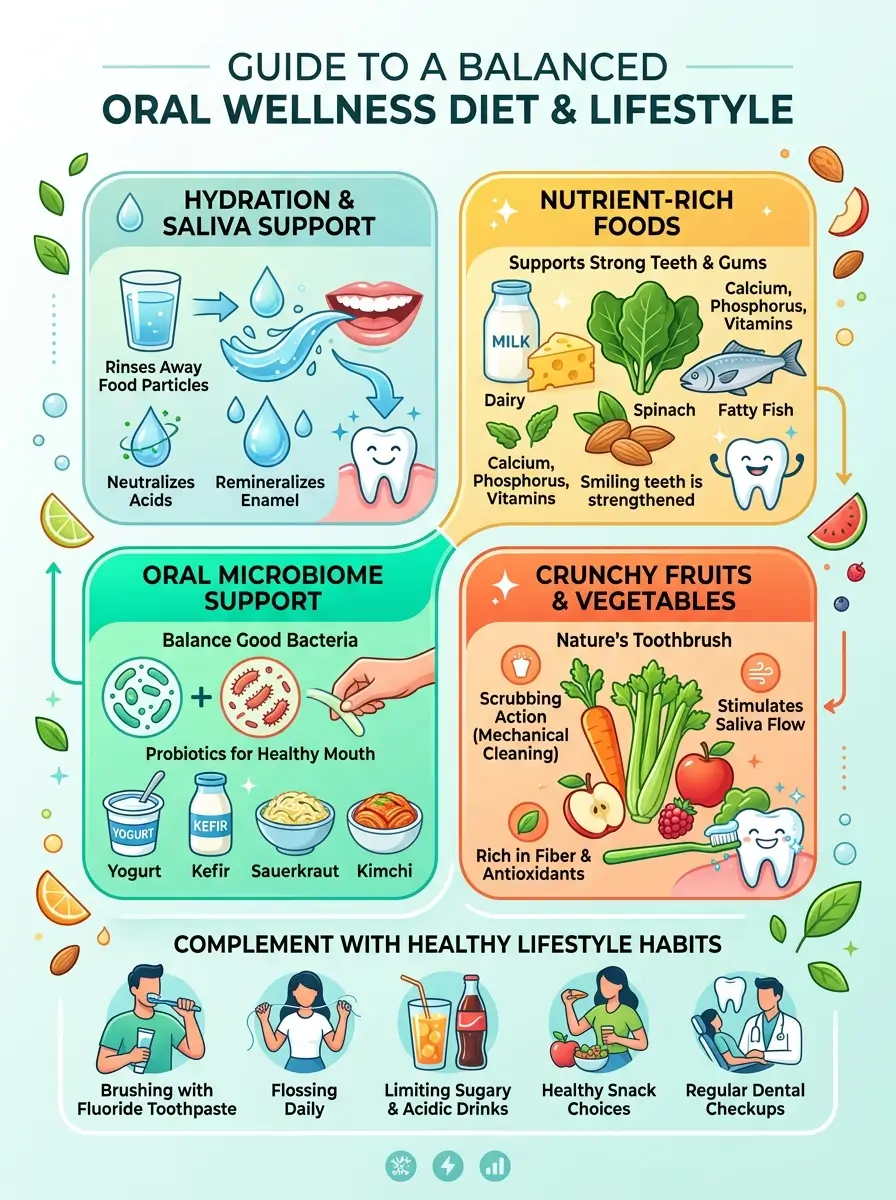
Building a Balanced Diet for Oral Wellness
No single food determines oral wellness.
Instead, researchers generally focus on broader dietary patterns and lifestyle habits.
Many oral wellness discussions emphasize:
- Staying hydrated
- Limiting excessive sugar consumption
- Eating nutrient-dense foods
- Maintaining consistent oral hygiene
- Choosing foods that support the oral microbiome
These habits may contribute to a more balanced approach to long-term wellness.
Healthy Eating Patterns Support Overall Wellness
Oral wellness, digestive wellness, and general well-being are often influenced by long-term lifestyle habits. Balanced nutrition, hydration, and consistent oral hygiene practices remain among the most commonly recommended foundations of a healthy lifestyle.
Supporting Oral Wellness Starts With Everyday Habits
Some people also explore modern oral wellness supplements designed to support fresh breath habits, oral comfort, and overall oral wellness as part of a broader daily routine.
Learn More Through Our In-Depth Reviews Below.
Recommended Reviews
Explore Our Top Oral Wellness Reviews
Looking for additional ways to support your oral wellness journey? Explore our in-depth reviews of some of the most popular oral health supplements and discover how they compare.
ProDentim

✅ Supports oral microbiome balance
✅ May help promote fresher breath
✅ Supports healthier gums
✅ Helps support daily oral wellness habits
✅ Designed to complement oral hygiene routines
ProvaDent

✅ Helps support fresher breath
✅ Supports healthier gums
✅ Promotes daily oral wellness habits
✅ Helps maintain a cleaner mouth feeling
✅ Complements brushing and flossing routines

Looking to build a healthier smile through simple daily habits? Our Complete Oral Wellness Guide brings together expert insights on oral hygiene, healthy gums, fresh breath, nutrition, saliva, and the oral microbiome to help you create a complete oral wellness routine.
Read the Complete Guide →Frequently Asked Questions About Foods Rich in Natural Probiotics
What foods contain natural probiotics?
Common examples include yogurt, kefir, sauerkraut, kimchi, miso, tempeh, and other fermented foods.
Is yogurt a natural probiotic food?
Many yogurt products contain live cultures created during fermentation, making yogurt one of the most widely recognized probiotic foods.
Can probiotic foods support oral wellness?
Researchers continue studying how nutrition and fermented foods may interact with the oral microbiome and overall oral wellness.
What is the difference between probiotics and fermented foods?
Fermented foods are foods produced through fermentation, while probiotics refer to specific beneficial microorganisms that may be present in some fermented products.
How often should probiotic foods be consumed?
Dietary choices vary by individual preference and nutritional needs. Many people include fermented foods as part of a balanced and varied diet.
Want to explore this topic in greater depth? Our Complete Guide to Oral Microbiome Wellness explains how the oral microbiome works, what influences microbial balance, and the daily habits that may help support a healthier oral environment.
Read the Complete Guide →Final Thoughts on Foods Rich in Natural Probiotics
Foods rich in natural probiotics continue to attract interest among researchers and wellness-conscious individuals alike. From yogurt and kefir to kimchi and tempeh, fermented foods have a long history of use in traditional diets around the world.
As scientific understanding evolves, these foods remain an important part of discussions surrounding nutrition, microbial diversity, oral wellness, and overall health.
Ready to Explore Your Oral Wellness Options?
Whether you’re interested in supporting your oral microbiome, healthy gums, or overall oral wellness, our in-depth product reviews can help you make a more informed decision.
Explore Product Reviews