
Best Foods for Fresh Breath: 9 Smart Choices for Oral Wellness
Can something as simple as an apple, a cup of green tea, or a serving of yogurt actually help your breath smell fresher?
Surprisingly, researchers have tested several everyday foods against some of the compounds responsible for unpleasant breath — and a few have produced interesting results.
Bad breath isn’t simply about what you eat. Bacteria on the tongue and elsewhere in the mouth can break down proteins and produce odor-causing compounds known as volatile sulfur compounds (VSCs). Saliva, hydration, oral hygiene, tongue coating, and certain foods can all influence this environment.
Some foods may help by stimulating saliva or supporting hydration. Others contain natural compounds that have been studied for their ability to interact with odor-producing molecules.
But the scientific evidence isn’t equally strong for every food.
Below, we’ll look at 9 of the best foods for fresh breath, why they may help, and what research actually tells us.
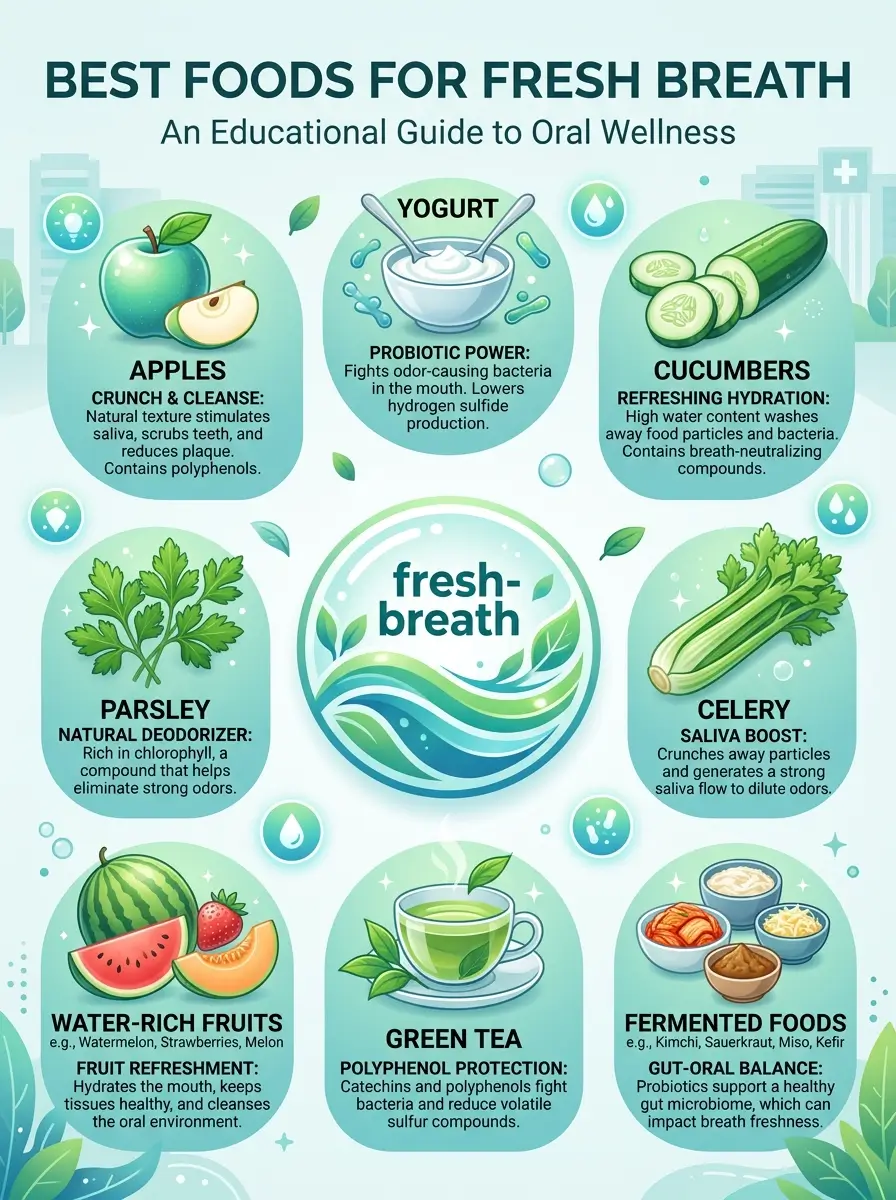
Fresh Breath Starts With Daily Habits
While certain foods are often associated with breath freshness, the greatest benefits usually come from combining healthy nutrition with hydration, oral hygiene, and consistent oral wellness habits.
What Actually Causes Bad Breath?
To understand why certain foods may help, it helps to first understand where bad breath comes from.
In many cases, persistent oral malodor begins inside the mouth.
Certain oral bacteria break down proteins and sulfur-containing amino acids, producing gases known as volatile sulfur compounds, particularly hydrogen sulfide and methyl mercaptan.
These compounds are among the major contributors to unpleasant oral odor.
The tongue is especially important. Its textured surface can collect bacteria, food debris, dead cells, and other material, creating an environment where odor-producing compounds can develop.
Other factors may contribute as well, including:
- tongue coating
- inadequate oral hygiene
- periodontal problems
- food debris
- reduced saliva
- dry mouth
- certain foods and beverages
This is why fresh breath involves more than simply covering odor with a mint.
The goal is to support a healthier oral environment.
Science Note: Reviews of oral malodor research identify anaerobic bacterial activity and tongue coating as important contributors to intra-oral halitosis. Proper oral hygiene and tongue cleaning therefore remain much more important than relying on any single food.
How Can Food Influence Your Breath?
Foods can affect breath in several different ways.
💧 Hydration
A dry mouth can make unpleasant odors more noticeable. Water and water-rich foods help maintain moisture in the mouth and support saliva’s natural functions.
💦 Saliva Stimulation
Chewing naturally stimulates saliva.
Saliva helps wash away food particles, lubricate oral tissues, and maintain the environment inside your mouth.
🌿 Natural Plant Compounds
Some fruits, vegetables, herbs, and teas contain polyphenols and other plant compounds that researchers have studied for their interactions with odor-producing molecules.
🦠 The Oral Environment
What you eat also interacts with the complex community of microorganisms living in your mouth — your oral microbiome.
Researchers are still learning exactly how diet affects this ecosystem, so claims about individual foods should be interpreted carefully.
Why Researchers Study Diet and Breath Freshness
Researchers continue exploring how foods and dietary patterns may influence saliva, hydration, oral bacteria, odor-producing compounds, and the oral microbiome. While evidence varies between individual foods, nutrition remains an active area of oral wellness research.
Which Foods Have the Best Evidence for Fresh Breath?
Not every food associated with fresher breath has the same level of scientific support. Some have been directly investigated for their effects on odor-related compounds, while others may help more indirectly through hydration, chewing, or their broader nutritional properties.
| Food | Why It Is Commonly Discussed |
|---|---|
| 🍎 Apples | High water content and a convenient snack option often included in fresh-breath-friendly diets. |
| 🥬 Leafy Greens | Popular part of balanced nutrition plans and wellness-focused eating habits. |
| 🥛 Yogurt | Frequently associated with active cultures and discussions about fermented foods. |
| 🥬 Celery | Crunchy, water-rich vegetable commonly included in healthy snack choices. |
| 🥒 Cucumbers | Known for high water content and frequently included in hydration-focused diets. |
| 🌿 Parsley | Traditionally discussed in conversations about breath freshness and healthy eating. |
| 🍉 Water-Rich Fruits | Support hydration-focused dietary habits and overall wellness routines. |
| 🍵 Green Tea | Popular beverage within wellness-focused lifestyles and healthy daily routines. |
| 🥣 Fermented Foods | Frequently discussed in relation to microbiome-related wellness topics. |
9 Best Foods for Fresh Breath
1. Apples — One of the Most Interesting Choices
Apples may be one of the most interesting foods studied for their potential effect on food-related breath odor.
Their crunchy texture encourages chewing, while their high water content makes them a practical addition to a fresh-breath-friendly diet.
But there may be more happening.
Researchers studying garlic breath found that eating raw apple significantly reduced several volatile compounds responsible for garlic odor.
The proposed explanation involves natural enzymes and phenolic compounds in apples interacting with odor-producing molecules.
Interestingly, raw apple performed better than apple juice for some of these compounds, suggesting that the structure and enzymatic activity of the fresh fruit may matter.
What the research says
A study published in the Journal of Food Science found that raw apple, raw lettuce, and mint leaves significantly decreased garlic-breath volatiles under the conditions tested.
Evidence level: 🟢 Promising for garlic-related breath odor
Practical idea
After a garlic-heavy meal, eating a fresh raw apple may be worth trying.
Just remember: research on garlic breath does not mean apples treat chronic halitosis.
2. Leafy Greens — More Interesting Than They Look
Leafy greens such as lettuce and spinach are frequently associated with a balanced diet, but some may also have interesting properties when it comes to food-related odors.
Lettuce, in particular, has been studied alongside apples and mint for its ability to reduce volatile compounds produced after eating garlic.
Researchers found that raw lettuce significantly reduced the garlic volatiles measured in breath.
The proposed mechanism again involves natural phenolic compounds and enzymatic reactions.
Leafy vegetables also contain considerable amounts of water, making them useful as part of meals that support hydration.
What the research says
Experimental research has shown a deodorizing effect from raw lettuce against several garlic-derived breath volatiles.
Evidence level: 🟢 Promising for garlic-related breath odor
Practical idea
Add fresh lettuce or other leafy greens to meals containing garlic or onions rather than treating them simply as decoration on the plate.
3. Yogurt — An Unexpected Fresh-Breath Candidate
Yogurt is particularly interesting because researchers are investigating it from more than one direction.
One involves garlic odor.
Laboratory research has found that yogurt can reduce sulfur-based volatile compounds from garlic.
Researchers examined yogurt’s individual components and found that protein, fat, and water all contributed to reducing concentrations of certain garlic volatiles.
Protein appeared particularly interesting because it could bind or interact with some of these odor-producing molecules.
Yogurt containing live cultures also attracts attention because of growing scientific interest in probiotics and the oral microbiome.
However, this distinction is important:
Eating ordinary yogurt should not be considered a proven treatment for chronic bad breath.
Clinical research into specific probiotic strains and halitosis is still developing, and results across studies have not always been consistent.
What the research says
Experimental evidence suggests yogurt and some of its components can reduce sulfur volatiles associated with garlic. Separately, probiotic research is investigating whether specific microorganisms may influence halitosis.
Evidence level: 🟡 Emerging
Practical idea
Choose plain or lower-sugar yogurt when possible, particularly if you’re already including yogurt as part of your regular diet.
4. Celery — Crunchy, Hydrating, and Saliva-Friendly
Celery doesn’t have the same direct research behind it as apples or green tea, but it has practical characteristics that make it worth including.
Celery contains a large amount of water and requires considerable chewing.
Chewing stimulates saliva production, while the water content contributes to overall hydration.
This matters because saliva is one of the mouth’s natural protective mechanisms.
A dry oral environment can allow odors to become more noticeable and may reduce the mouth’s natural ability to clear food debris.
What the research says
Evidence specifically showing that celery reduces halitosis is limited. Its potential benefit is primarily indirect through chewing, hydration, and saliva stimulation.
Evidence level: ⚪ Indirect
Practical idea
Celery can be a convenient crunchy snack between meals, particularly when paired with adequate water intake.
5. Cucumbers — Simple Hydration Support
Cucumbers are composed largely of water, which makes their potential role straightforward.
They aren’t a treatment for bad breath, and evidence showing a direct deodorizing effect is limited.
Their value is primarily related to maintaining hydration.
Adequate saliva is important because it helps rinse food particles from the mouth and supports the natural oral environment.
What the research says
There is limited direct evidence that cucumber itself reduces bad breath.
Its role is better understood as part of a hydration-supportive diet.
Evidence level: ⚪ Indirect
Practical idea
Cucumber slices can be an easy addition to meals or snacks when you’re trying to increase your intake of water-rich foods.
6. Parsley — Popular Remedy, but the Evidence Is Mixed
Parsley has probably been recommended as a natural breath freshener for generations.
But does it actually work?
The answer isn’t as simple as many wellness articles suggest.
Some experimental research has found deodorizing activity from parsley against certain garlic-derived compounds.
However, another study examining oral volatile sulfur compounds found that a parsley-seed oil product did not significantly reduce VSC concentrations under the conditions tested.
That makes parsley a perfect example of why traditional reputation and scientific evidence aren’t always the same thing.
What the research says
Research on parsley and breath odor has produced mixed findings, and evidence is not strong enough to consider parsley a reliable treatment for halitosis.
Evidence level: 🟡 Mixed
Practical idea
There’s nothing wrong with including fresh parsley in meals, but don’t depend on a sprig of parsley to solve persistent bad breath.
7. Water-Rich Fruits — Helpful for a Dry Mouth
Watermelon, oranges, strawberries, pears, and other water-rich fruits can contribute to overall fluid intake.
Their potential fresh-breath benefit is mostly indirect.
When saliva production decreases and the mouth becomes dry, the natural cleansing process inside the mouth becomes less effective.
That’s one reason morning breath can be stronger after hours of reduced saliva flow during sleep.
Water-rich foods can complement — but shouldn’t replace — drinking water.
What the research says
Evidence that individual water-rich fruits directly reduce halitosis is limited. Their primary value comes from hydration and saliva support.
Evidence level: ⚪ Indirect
Practical idea
Use water-rich fruits as snacks while continuing to drink water throughout the day.
8. Green Tea — Promising, but Probably Temporary
Green tea deserves special attention because researchers have measured its effect directly against compounds associated with oral malodor.
In one study, green tea produced a significant immediate reduction in two important volatile sulfur compounds:
- hydrogen sulfide
- methyl mercaptan
The effect, however, was temporary.
Researchers did not observe the same reduction at measurements taken one, two, and three hours later.
That distinction is important.
Green tea may help temporarily influence breath odor, but it shouldn’t be presented as a long-term solution for chronic halitosis.
What the research says
Research suggests green tea may temporarily reduce certain volatile sulfur compounds in the mouth, potentially because of the deodorizing and antimicrobial properties of tea polyphenols.
Evidence level: 🟢 Promising for short-term effects
Practical idea
Unsweetened green tea may be a useful beverage after meals, particularly when replacing sugary drinks.
9. Fermented Foods — Interesting, but Don’t Overstate the Evidence
Fermented foods such as kefir and certain cultured dairy products have attracted attention because they contain microorganisms associated with fermentation.
This connects with a much larger area of research: the oral microbiome.
Researchers are investigating whether specific probiotics can help influence the bacteria associated with oral malodor.
The evidence, however, is still evolving.
Some systematic reviews and clinical studies have reported improvements in measures such as organoleptic scores or volatile sulfur compounds with certain probiotic strains, while other reviews have concluded that the available evidence is insufficient for firm clinical recommendations.
And there’s another important distinction:
A fermented food is not automatically equivalent to a clinically studied oral probiotic.
Different foods contain different microorganisms, in different quantities, with different survival characteristics.
What the research says
Probiotics are a promising area of oral-health research, but evidence should not be generalized to every fermented food.
Evidence level: 🟡 Emerging
Practical idea
Enjoy fermented foods as part of a balanced diet rather than treating them as a cure for bad breath.
Which Foods Have the Best Evidence for Fresh Breath?
Not every food associated with fresher breath has the same level of scientific support. Some have been directly investigated for their effects on odor-related compounds, while others may help more indirectly through hydration, chewing, or their broader nutritional properties.
Here’s a simple way to compare them:
| Food | Evidence | Why It May Help |
|---|---|---|
| 🍎 Raw apple | 🟢 Promising | Studied against garlic-breath volatiles |
| 🥬 Raw lettuce | 🟢 Promising | Studied against garlic-breath volatiles |
| 🍵 Green tea | 🟢 Promising | Short-term reduction in oral VSCs |
| 🥛 Yogurt | 🟡 Emerging | Protein, fat, and water interact with garlic volatiles |
| 🌿 Parsley | 🟡 Mixed | Conflicting experimental findings |
| 🥣 Fermented foods | 🟡 Emerging | Related probiotic research is developing |
| 🥬 Celery | ⚪ Indirect | Chewing + hydration |
| 🥒 Cucumber | ⚪ Indirect | Primarily hydration |
| 🍉 Water-rich fruits | ⚪ Indirect | Primarily hydration |
The takeaway: Apples, lettuce, and green tea have some of the most interesting direct evidence, but much of the food research involves short-term effects or garlic-related breath rather than chronic halitosis.
Nutrition Is Part of a Bigger Picture
Certain foods may temporarily influence breath or support saliva and hydration, but long-term fresh breath depends on a broader oral wellness routine. Regular oral hygiene, tongue cleaning, adequate hydration, healthy saliva flow, and professional dental care remain more important than relying on any single food..
Foods That Can Make Your Breath Worse
Some foods can have the opposite effect.
Garlic
Garlic is one of the best-studied examples.
After garlic is consumed, several sulfur-containing volatile compounds can contribute to its characteristic odor.
Some compounds can persist beyond the mouth, which helps explain why simply brushing your teeth doesn’t always eliminate garlic breath immediately.
Onions
Onions also contain sulfur compounds that can contribute to noticeable breath odor after eating.
Sugary Foods
Frequent consumption of sugary foods can influence the oral environment by providing fermentable carbohydrates to oral bacteria.
That doesn’t mean a single dessert automatically causes bad breath, but frequent sugar exposure is not ideal for overall oral wellness.
Coffee
Alcohol
Coffee has a strong aroma of its own and may leave lingering compounds in the mouth.
For some people, frequent coffee drinking can also coincide with a dry-mouth sensation, making water intake particularly useful.
Alcoholic beverages may contribute to oral dryness in some people.
If dry mouth is already a concern, alternating alcoholic beverages with water can help maintain hydration.
A Simple Fresh-Breath Routine After Meals
You don’t need a complicated routine.
Try this approach:
1. Drink water
Water helps rinse the mouth and supports normal saliva function.
2. Finish with something fresh and crunchy
A raw apple is particularly interesting after meals containing garlic.
3. Consider unsweetened green tea
Research suggests its effect on VSCs may be temporary, but it can be a useful post-meal beverage.
4. Don’t forget your tongue
The tongue can harbor large numbers of odor-producing bacteria.
Tongue cleaning can therefore be an important part of a complete oral hygiene routine.
5. Brush and clean between your teeth
Foods can complement oral hygiene — they cannot replace it.
6. Pay attention to persistent bad breath
Bad breath that continues despite regular oral hygiene deserves more attention than another mint or apple.
Want to discover what truly supports long-term breath freshness? Our Complete Guide to Fresh Breath and Oral Wellness explores the role of oral bacteria, saliva, hydration, tongue cleaning, nutrition, and daily habits to help you build a healthier and fresher oral environment.
Read the Complete Guide →When Food Isn’t Enough
Occasional bad breath after garlic, onions, coffee, or waking up is different from persistent bad breath.
Research indicates that much of chronic oral malodor originates within the mouth, with tongue coating, bacterial activity, periodontal conditions, oral hygiene, and reduced saliva among the factors that may contribute.
If bad breath persists despite regular brushing, interdental cleaning, tongue cleaning, and adequate hydration, consider discussing it with a dentist or healthcare professional.
Persistent bad breath can have several causes, and identifying the underlying reason is more useful than repeatedly masking the odor.
What Does Science Really Say About Foods for Fresh Breath?
The scientific picture is more nuanced than many “natural fresh breath” lists suggest.
There is evidence that certain foods can influence specific odor-producing compounds.
Raw apple and lettuce have demonstrated interesting effects against garlic-breath volatiles.
Green tea has demonstrated short-term reductions in vSolatile sulfur compounds.
Yogurt components have demonstrated an ability to reduce certain garlic volatiles in experimental research.
But that doesn’t mean these foods cure chronic halitosis.
Most evidence supports viewing food as one small part of a broader fresh-breath strategy that includes:
- good oral hygiene
- tongue cleaning
- adequate hydration
- healthy saliva flow
- regular dental care
- attention to persistent oral problems
Think of food as supporting the environment of your mouth — not replacing proper oral care.
Supporting Oral Wellness Starts With Everyday Habits
Some people also explore modern oral wellness supplements designed to support fresh breath habits, oral comfort, and overall oral wellness as part of a broader daily routine.
Learn More Through Our In-Depth Reviews Below.
Recommended Reviews
Explore Our Top Oral Wellness Reviews
Looking for additional ways to support your oral wellness journey? Explore our in-depth reviews of some of the most popular oral health supplements and discover how they compare.
ProDentim

✅ Supports oral microbiome balance
✅ May help promote fresher breath
✅ Supports healthier gums
✅ Helps support daily oral wellness habits
✅ Designed to complement oral hygiene routines
ProvaDent
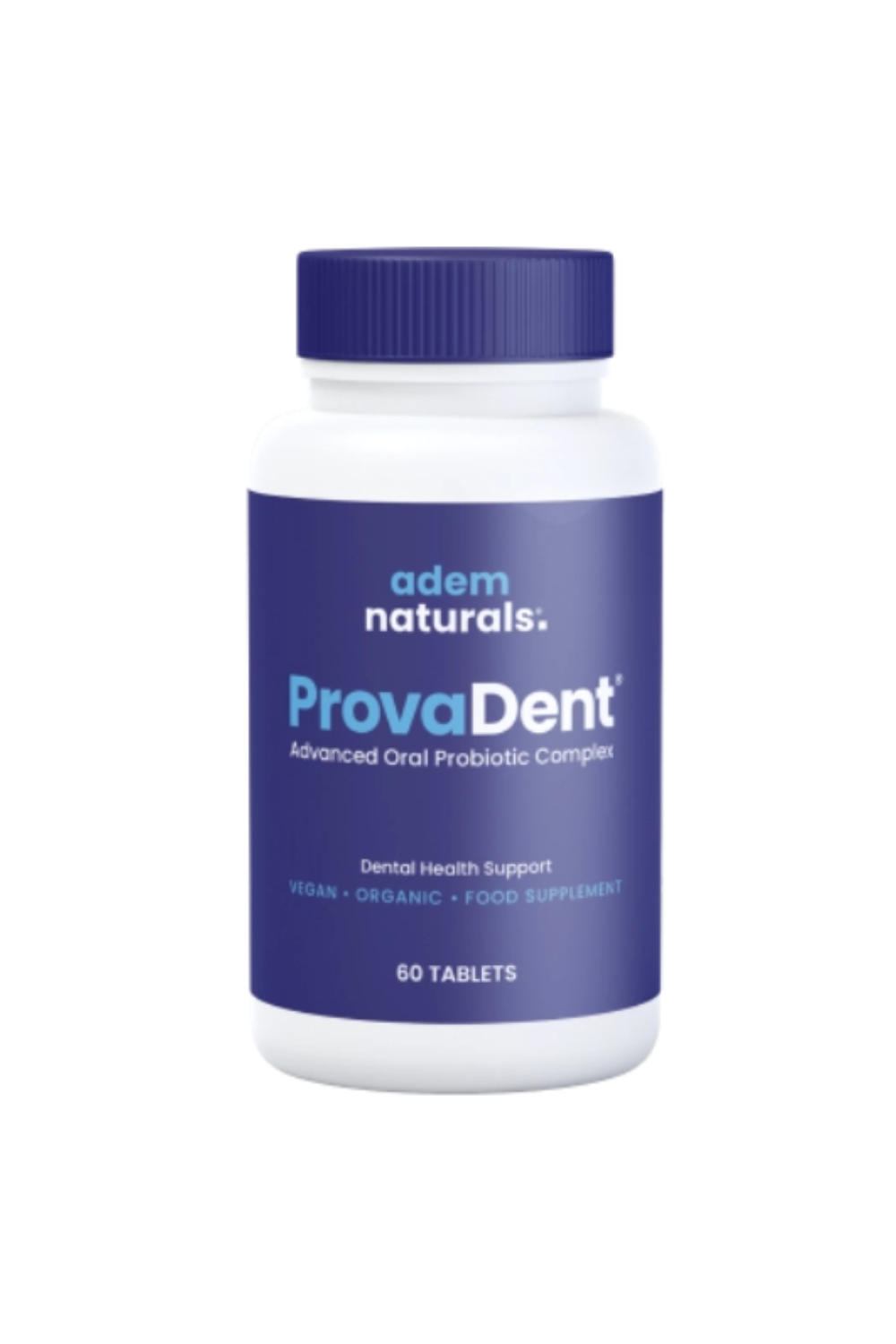
✅ Helps support fresher breath
✅ Supports healthier gums
✅ Promotes daily oral wellness habits
✅ Helps maintain a cleaner mouth feeling
✅ Complements brushing and flossing routines
Frequently Asked Questions About Foods for Fresh Breath
The questions below explain what current research suggests about foods commonly associated with fresher breath, including apples, green tea, yogurt, and water-rich foods, as well as when persistent bad breath may require professional attention.
What are the best foods for fresh breath?
Raw apples, lettuce, yogurt, water-rich fruits, and green tea are among the most interesting options. Apples, lettuce, and green tea have particularly notable research behind specific short-term breath-related effects, although the strength and type of evidence vary between foods.
What food gets rid of bad breath fast?
No food can reliably eliminate every cause of bad breath. Research suggests that raw apple may reduce several volatile compounds associated with garlic breath, while green tea may temporarily reduce certain volatile sulfur compounds linked to oral malodor.
Do apples help with bad breath?
Possibly, particularly after eating garlic. Experimental research found that raw apple significantly reduced several garlic-breath volatiles. However, this should not be interpreted as evidence that apples can treat persistent or chronic halitosis.
Does green tea help bad breath?
Research suggests that green tea may temporarily reduce certain volatile sulfur compounds associated with oral malodor. In one study, the effect was observed immediately but was no longer detected one to three hours later, suggesting that any benefit may be short-lived.
Does yogurt help with bad breath?
Research suggests that yogurt and components such as protein, fat, and water can interact with sulfur-containing volatiles from garlic. Research into probiotics and persistent halitosis is also developing, but yogurt should not be considered a proven treatment for chronic bad breath.
Can drinking more water improve breath?
Adequate hydration supports normal saliva production and helps reduce dry mouth. Because reduced saliva can contribute to oral malodor, staying properly hydrated is an important part of a broader fresh-breath and oral wellness routine.
Why does my breath still smell after brushing?
Bad breath can originate from areas that brushing alone does not fully address, particularly the tongue and spaces between the teeth. Dry mouth, periodontal problems, diet, plaque accumulation, and other factors may also contribute to persistent oral malodor.
When should I see a dentist about bad breath?
Consider professional dental evaluation if bad breath persists despite consistent brushing, interdental cleaning, tongue cleaning, adequate hydration, and routine oral care. Persistent bad breath can have multiple causes, and identifying the underlying factor is more important than simply masking the odor.
Final Thoughts: Best Foods for Fresh Breath
The best foods for fresh breath aren’t magic breath fresheners.
But some are more interesting than others.
Research suggests that raw apples and lettuce may reduce compounds associated with garlic breath, while green tea may temporarily reduce certain volatile sulfur compounds produced in the mouth.
Yogurt is another interesting candidate, while celery, cucumber, and water-rich fruits may primarily help by supporting hydration and saliva.
The bigger lesson is simple:
Fresh breath depends on the environment inside your mouth, not just the smell of the last food you ate.
A balanced diet, adequate hydration, tongue cleaning, regular brushing and interdental cleaning, and professional dental care remain the foundation of long-term oral wellness.
Looking to build a healthier smile through simple daily habits? Our Complete Oral Wellness Guide brings together expert insights on oral hygiene, healthy gums, fresh breath, nutrition, saliva, and the oral microbiome to help you create a complete oral wellness routine.
Read the Complete Guide →Foods can help support that routine — but they shouldn’t replace it.

Scientific References and Further Reading
Mirondo R, Barringer SA.Deodorization of Garlic Breath by Foods, and the Role of Polyphenol Oxidase and Phenolic Compounds. Journal of Food Science. 2016;81(10):C2425–C2430. DOI: 10.1111/1750-3841.13439.
View study on PubMed
Lodhia P, Yaegaki K, Khakbaznejad A, et al.Effect of Green Tea on Volatile Sulfur Compounds in Mouth Air. Journal of Nutritional Science and Vitaminology. 2008;54(1):89–94. DOI: 10.3177/jnsv.54.89.
View study on PubMed
Kaur M, Barringer S.Effect of Yogurt and Its Components on the Deodorization of Raw and Fried Garlic Volatiles. Molecules. 2023;28(15):5714. DOI: 10.3390/molecules28155714.
View study on PubMed
Hughes FJ, McNab R.Oral malodour — a review. Archives of Oral Biology. 2008;53(Suppl 1):S1–S7. DOI: 10.1016/S0003-9969(08)70002-5.
View study on PubMed
Seerangaiyan K, Jüch F, Winkel EG.Tongue coating: its characteristics and role in intra-oral halitosis and general health — a review. Journal of Breath Research. 2018;12(3):034001. DOI: 10.1088/1752-7163/aaa3a1.
View study on PubMed
Huang N, Li J, Qiao X, et al.Efficacy of probiotics in the management of halitosis: a systematic review and meta-analysis. BMJ Open. 2022;12:e060753. DOI: 10.1136/bmjopen-2022-060753.
View full study on BMJ Open
Tay JRH, Ng E, Lai CWM, Lim LP, Ong MMA.The efficacy of probiotics in the management of intra-oral halitosis: a systematic review. Clinical Oral Investigations. 2022;26(7):4687–4700. DOI: 10.1007/s00784-022-04522-w.
View study on PubMed
Editorial Note: This article is intended for educational purposes and summarizes findings from published scientific research. Foods may temporarily influence breath or support oral wellness, but they are not treatments for persistent halitosis or dental disease.
Ready to Explore Your Oral Wellness Options?
Whether you’re interested in supporting your oral microbiome, healthy gums, or overall oral wellness, our in-depth product reviews can help you make a more informed decision.
Explore Product Reviews